
The next billion internet users will break today's measures of success

For decades, connectivity has been judged by the same familiar measures of success: ARPU, churn, ARR, EBITDA margins and subscriber counts. These worked when the internet was rolling out across wealthy suburbs, corporate offices and middle-class neighbourhoods, places where incomes were stable, billing was automated and competition was limited.
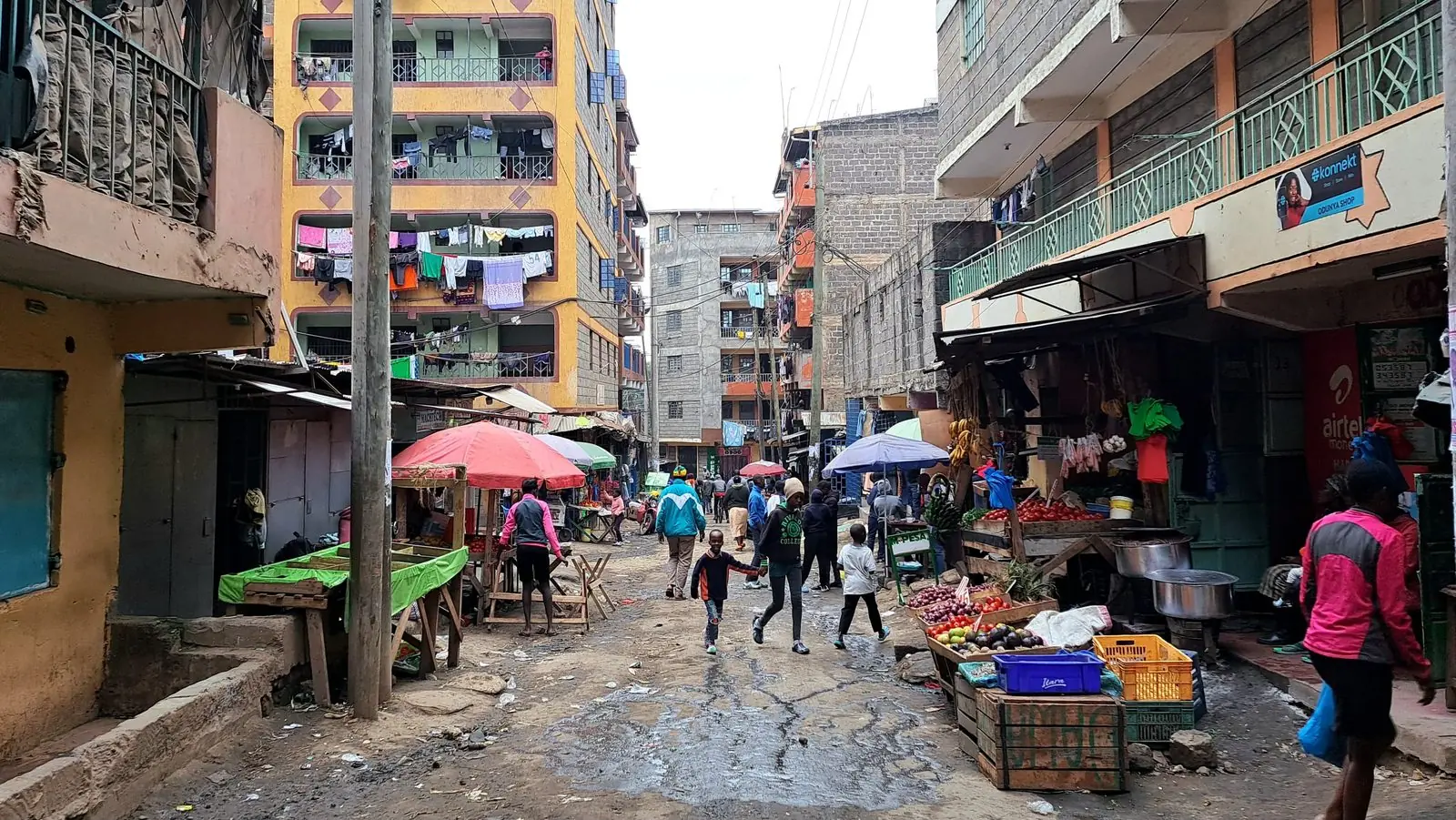
However, those measures were built for the last billion people who came online. They collapse when applied to the next billion: families in Nairobi's estates, Lagos's neighbourhoods or South Africa's townships.
If we keep clinging to yesterday's metrics, we will undervalue the opportunity, incorrectly price the risk, and miss the biggest growth story in connectivity.
When $1 means more
Traditional measures tell us that a high-income household paying $60 for broadband is “better” revenue. It looks stable and predictable. Yet that dollar carries little meaning.
Compare it to a low-income family spending $12 on internet. That dollar competes with food, rent or school fees. The fact they still choose connectivity is a louder signal:
“This is no longer a luxury. It's essential.”
By old measures, it looks like less. By the right measure, it's worth more. It's the purest proof of product-market fit.
Crowded markets vs. green space
Old measures value stability. Yet those markets are already red oceans, with multiple ISPs fighting for the same affluent households. Customer acquisition costs are high, margins shrink and growth is incremental.
The next billion users live in green space. Millions of households remain unserved. One kilometre of fibre in a densely populated Nairobi neighbourhood can pass four to ten times more homes than in an affluent suburb. By this measure, revenue density is far higher, and growth is exponential.
New models, new measures
The legacy telco playbook of long contracts, rigid monthly billing and expensive sales teams cannot unlock this market. New models, and new measures of success, are needed:
- Prepaid and micro-billing: flexibility isn't a weakness; it's proof of inclusion.
- Community distribution: trust and word-of-mouth become the real measure of reach.
- Shared infrastructure: revenue per kilometre matters more than ARPU per household.
- Adjacency platforms: broadband is the on-ramp to payments, education, commerce and local content.
These aren't cut-price models. They are smarter models that demand smarter measures.
Rethinking risk and capital
Old measures label low-income markets as risky. However, if we look closer, capital here can be more efficient and often safer.
- Capital efficiency: with up to ten times more homes passed per kilometre, each dollar of capex goes further, with revenue per kilometre exceeding high-income markets.
- Lower CAC: community-led distribution costs a fraction of suburban marketing.
- Resilience: customers who sacrifice to stay connected are stickier. Flexible billing smooths cash flow and lowers default risk.
- Optionality: each connection multiplies into fintech, commerce, education and other digitally delivered services, boosting lifetime value at little extra cost.
The real measure isn't ARPU. It's risk-adjusted return on capital. On that score, the next billion look stronger.
The bigger point
The measures of success that built the last billion users, such as ARPU, churn and EBITDA, are relics. They cannot explain the scale, resilience or opportunity of the next billion. New measures that factor in density, product proof, optionality and impact reveal the truth: a dollar from a low-income household isn't equal to a dollar from a wealthy suburb. It's worth more.
The hardest dollar isn't just revenue. It's evidence that connectivity has become indispensable, and it's the clearest signal of where the real future lies. The next billion users will break today's measures of success. The question is: are we bold enough to build new ones?