Harvard Business School and konnekt: which smart device comes next?
An HBS student team asked lower-income Nairobi households which smart device they would buy next. The answer was a laptop or tablet for learning, not a smart TV.

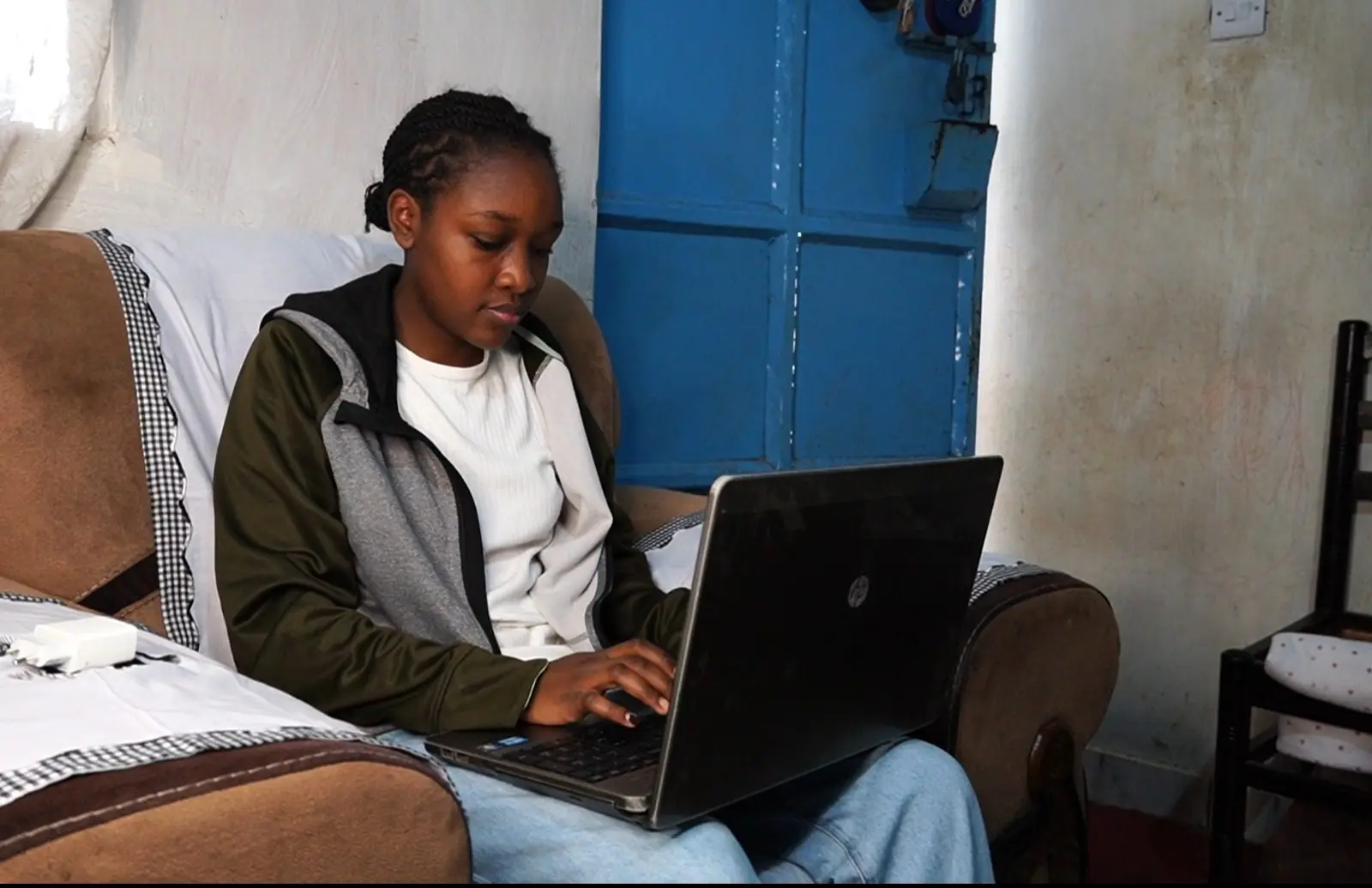
In May 2024, before konnekt became an independent company, our team hosted six first-year MBA students from Harvard Business School through the school's FIELD Global Immersion programme. It was the second of three design thinking projects our team ran with HBS, in 2023, 2024 and 2025.
Their question was simple to ask and hard to answer: which smart device at home would low- and middle-income Kenyans actually want to buy, and how could we help them get it?
How they worked
The team used a double diamond design thinking process, starting in Boston and finishing in Nairobi. They built on our own earlier research, including our 2022 digital personas and our early-2024 studies of smart devices in urban Nairobi, then went into the field:
- Interviewed households in Kawangware, Baba Dogo and Lucky Summer, where most household incomes are under KES 30,000 a month
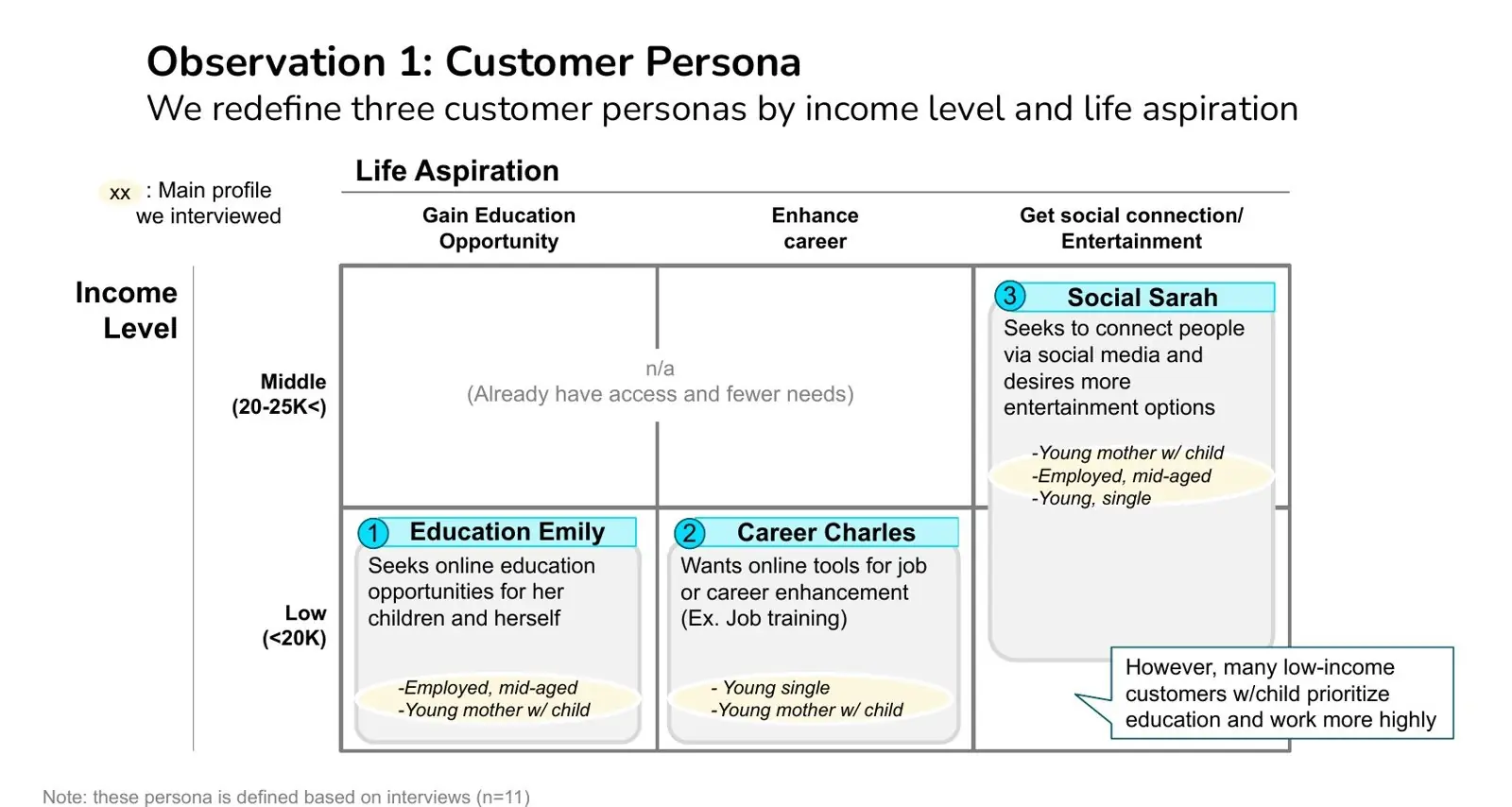
- Tested the personas from our earlier research and redrew them around income and life goals
- Discussed their findings with students at Strathmore Business School in Nairobi
What they found
- Aspiration matters as much as income. Lower-income households saw a device as a tool to create opportunity for their families, with education first. As incomes rise, entertainment takes over.
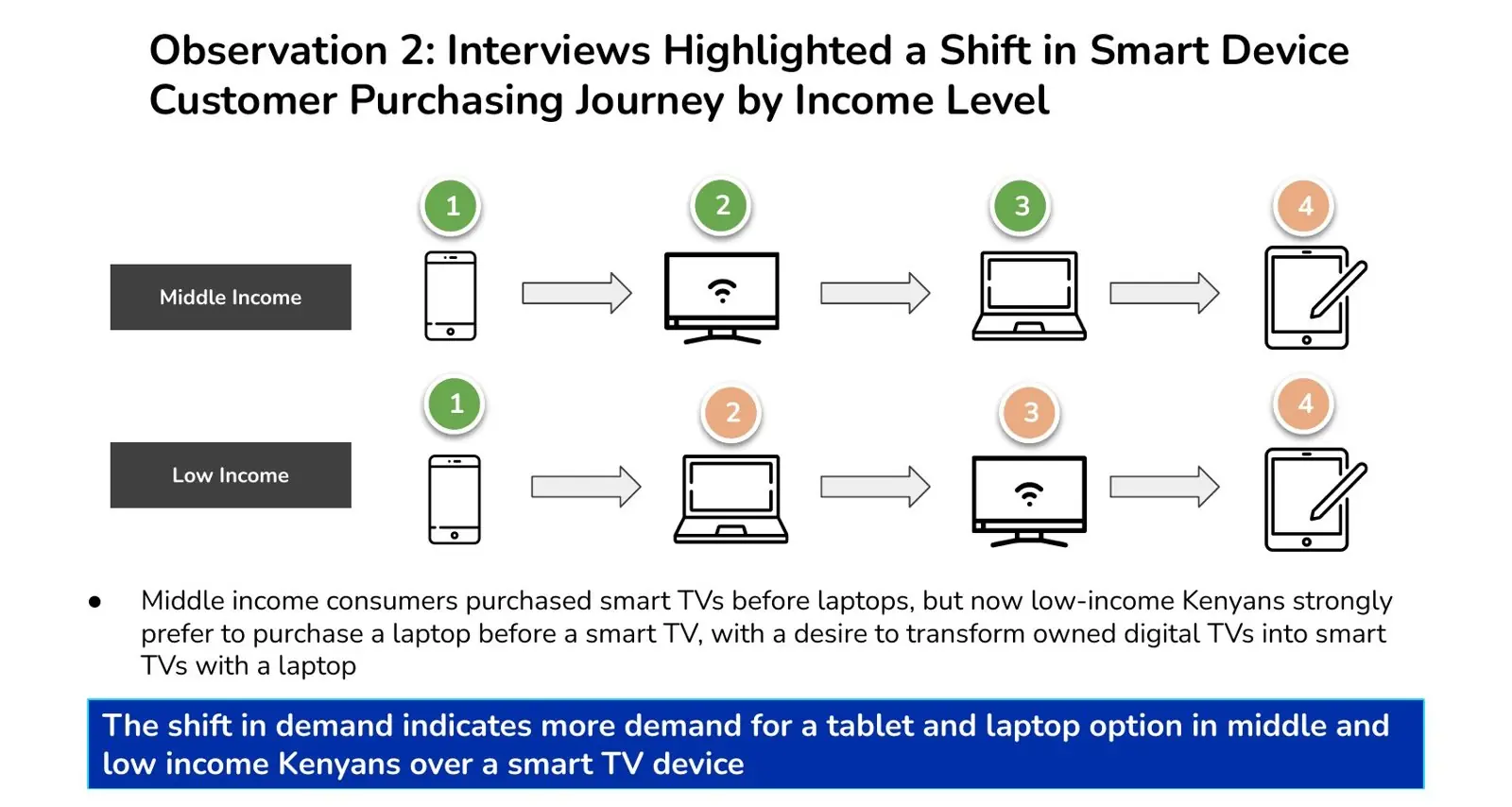
- The buying order has flipped. Middle-income households bought a smart TV before a laptop. Lower-income households now want a laptop first, and many want to use it to make the TV they already own “smart”.
- Financing is distrusted. People were wary of paying interest on a device. Financing would only work with a trusted partner and clear explanation.
- New beats refurbished. Past disappointments with second-hand laptops made people prefer to save for a new device, unless a warranty or repair promise came with it.
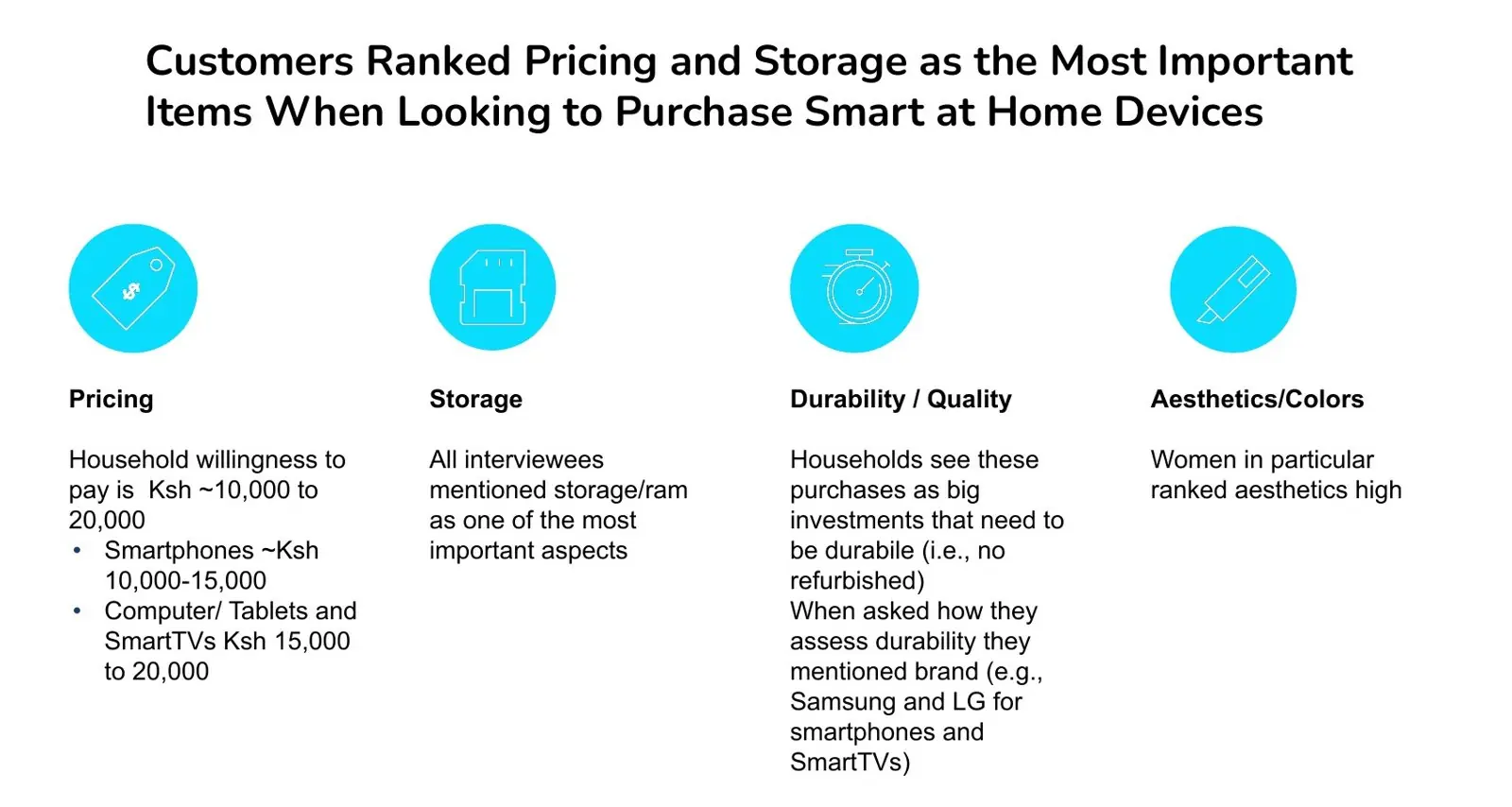
- What matters most: price (most households could pay around KES 10,000 to 20,000), storage, durability and a brand they trust.
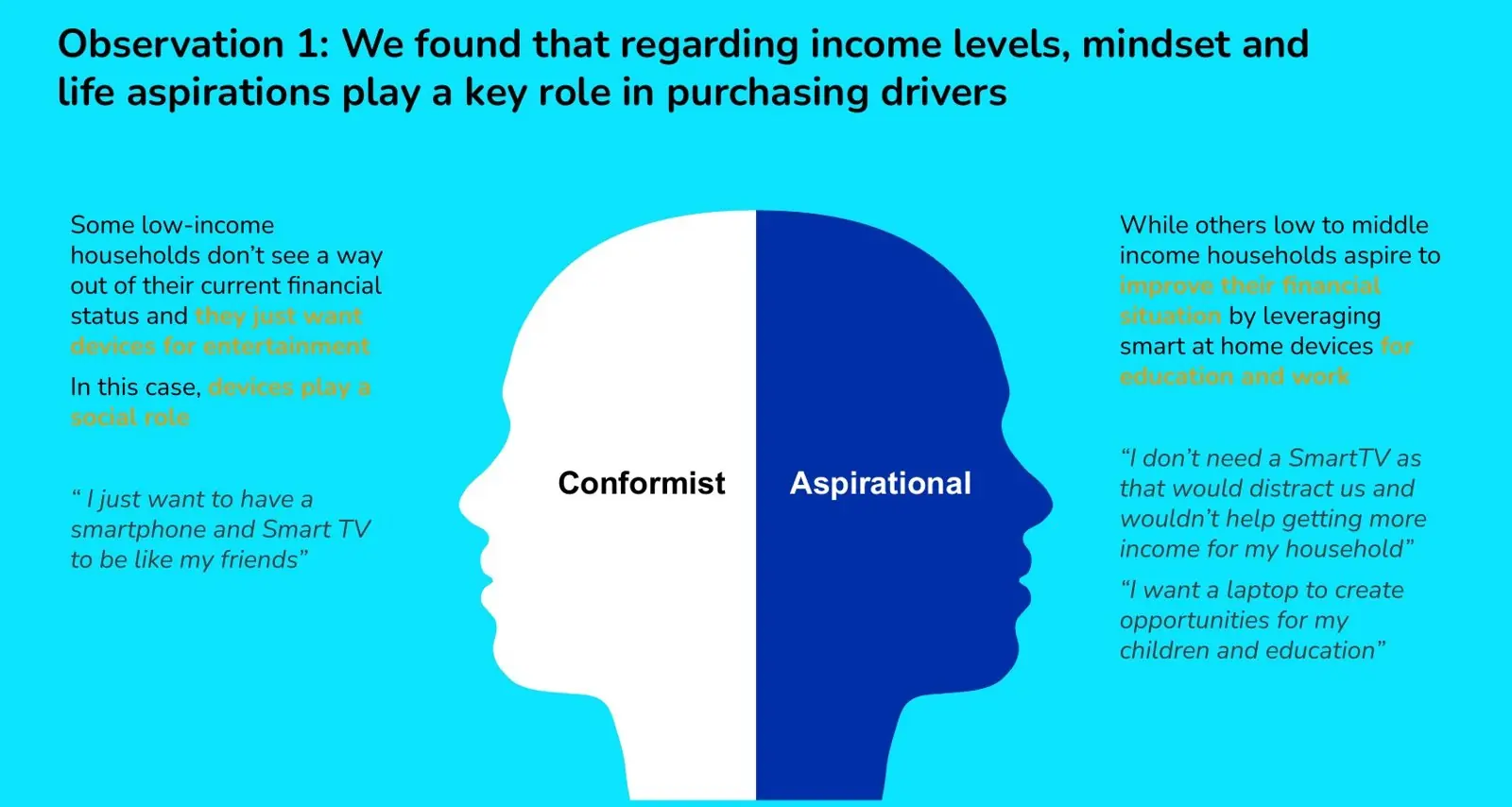
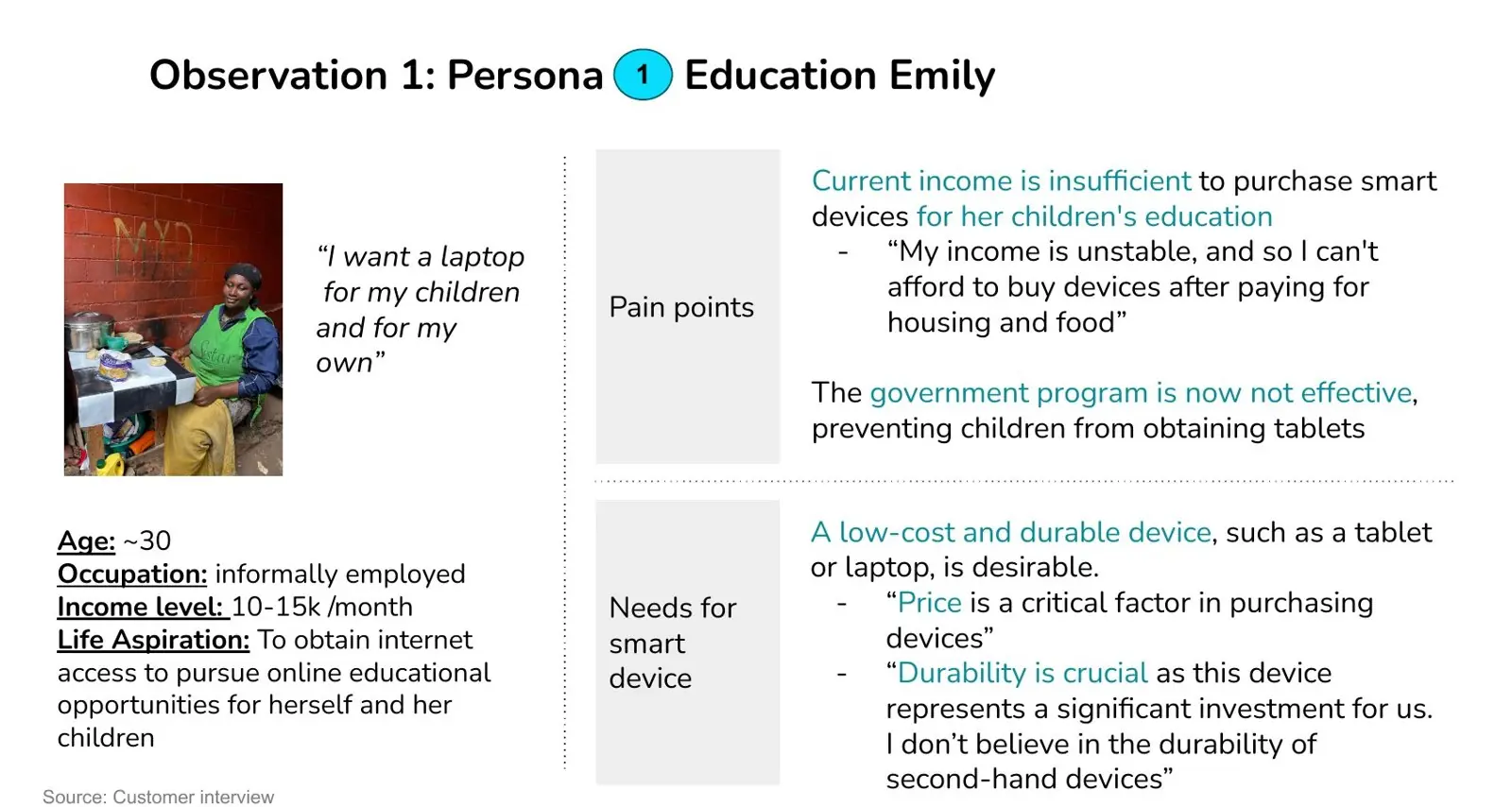
“I want a laptop to create opportunities for my children and education.” A mother in one of the households interviewed
“I would rather the device be fully mine when I buy, since my income is not consistent and the future isn't predictable.” A customer explaining why he avoids financing
The team summed up the people they met in three personas: Education Emily, who wants a device so she and her children can learn online; Career Charles, a student and small business owner who uses cyber cafés because he can't yet afford a laptop; and Social Sarah, a stay-at-home mother who wants a personal device to stay connected.
A Strathmore student who managed construction workers put it plainly: any device has to be tied directly to improving life in the near term, or it won't be bought.
What they proposed
- A modular, education-first tablet: a basic, affordable device with learning apps pre-installed, that can grow with a keyboard, a bigger battery or more storage when the family can afford them.
- A curated content platform: learning and entertainment content reached through the konnekt app, organised so first-time users can find what's useful.
- Next steps: validate demand with a larger sample, check the unit economics and find the right manufacturing partner.
They also flagged something outside their brief: several families asked for a rechargeable light, because children couldn't finish homework during power cuts.
Where it led
The project confirmed something we see every day: connectivity on its own is not enough. People need relevant content, practical digital skills and devices that fit their budgets and goals. That thinking runs through konnekt recommends, our free library of curated learning and entertainment, and through konnekt Academy.
Read our research on smart devices in Kenya →
Thank you
Our thanks to the HBS team and the FIELD Global Immersion faculty and staff, to the students of Strathmore Business School, and to the families in Kawangware, Baba Dogo and Lucky Summer who welcomed the team into their homes.