Harvard Business School and konnekt: designing Wi-Fi for the bus stage
Six HBS MBA students spent a week in Kawangware asking how people could get fast, affordable internet beyond the home. Here's what they heard and what they designed.

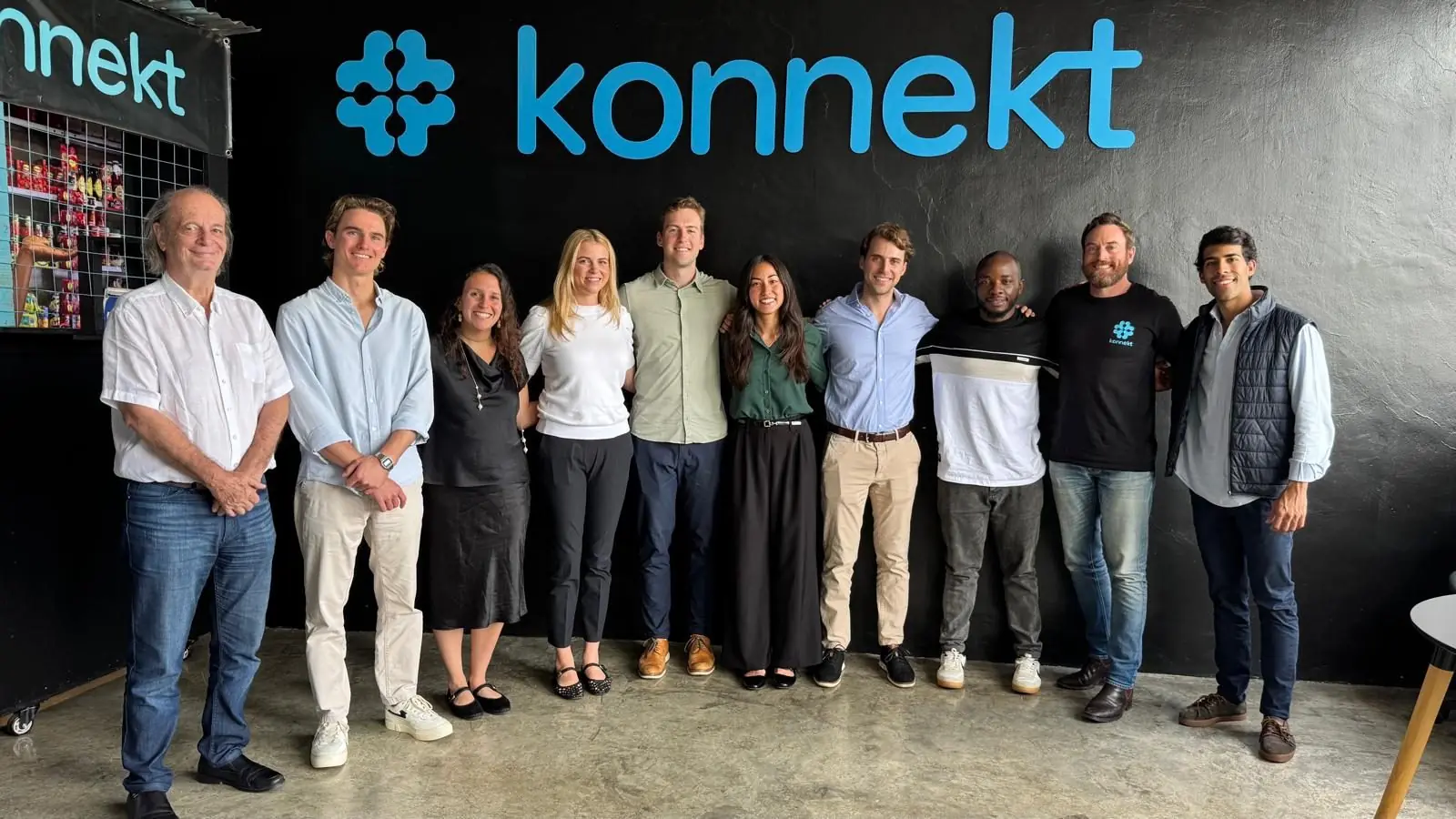
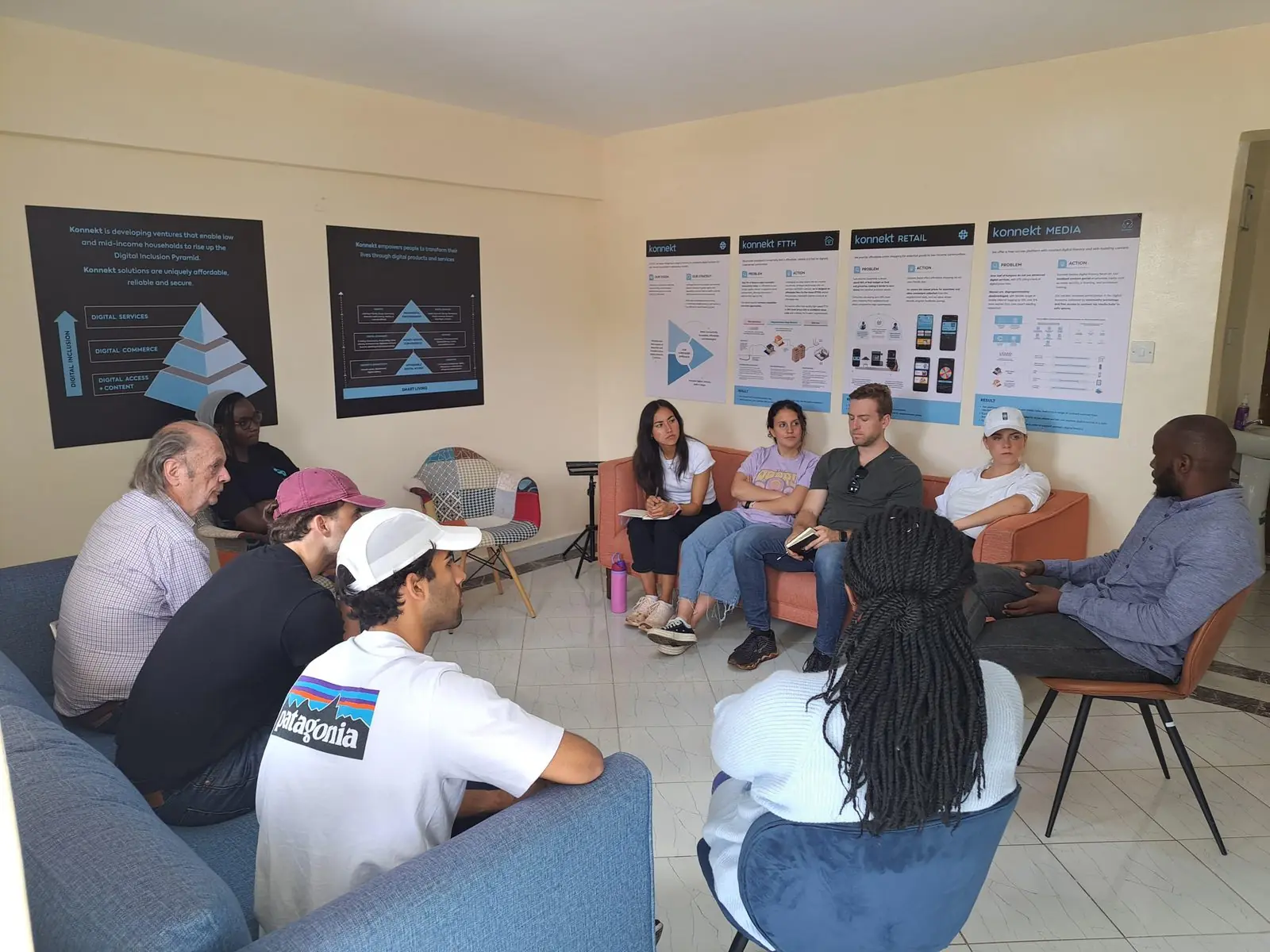
In May 2025 konnekt hosted six first-year MBA students from Harvard Business School through the school's FIELD Global Immersion programme. Each year HBS chooses around 170 companies worldwide as Global Partners for the programme, and konnekt was one of only a few in Africa.
It was the third consecutive year that HBS chose our team as a host, after projects in 2023 and 2024. This one started in a Boston classroom in March and finished with a week on the ground in our neighbourhoods.
The brief
Fibre into every home is where every konnekt network ends up, but each home connection takes time and money to build. Meanwhile, earlier public Wi-Fi in neighbourhoods like Kawangware had left people wary: slow, unreliable and full of catches.
So we asked the team a design question: how might we give people fast, affordable and reliable internet beyond the home, onboard them cheaply, and turn first-time users into loyal customers?
How they worked
The team followed a double diamond design process: research and define the problem first, then generate, test and narrow down solutions. In Nairobi they:
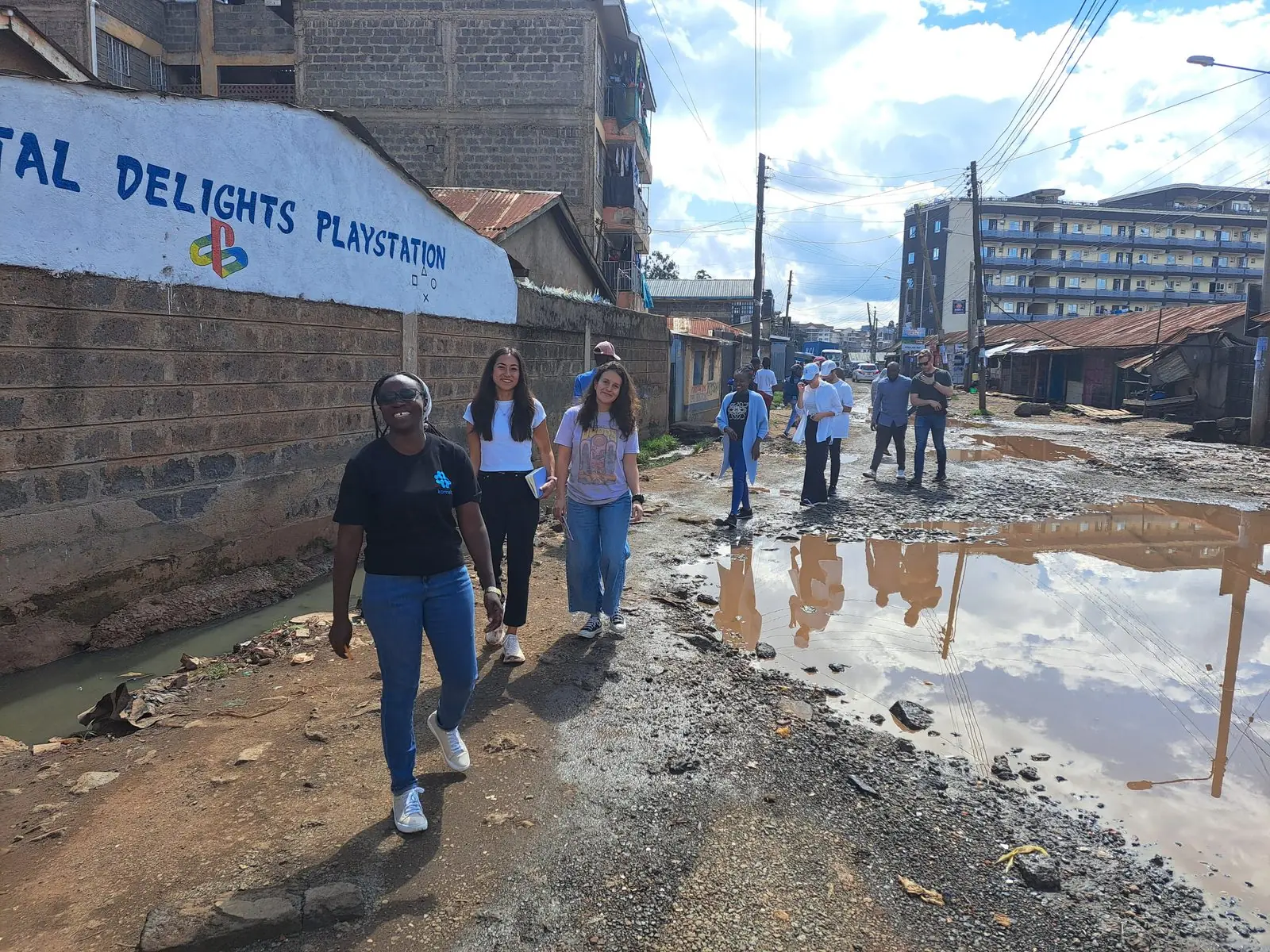
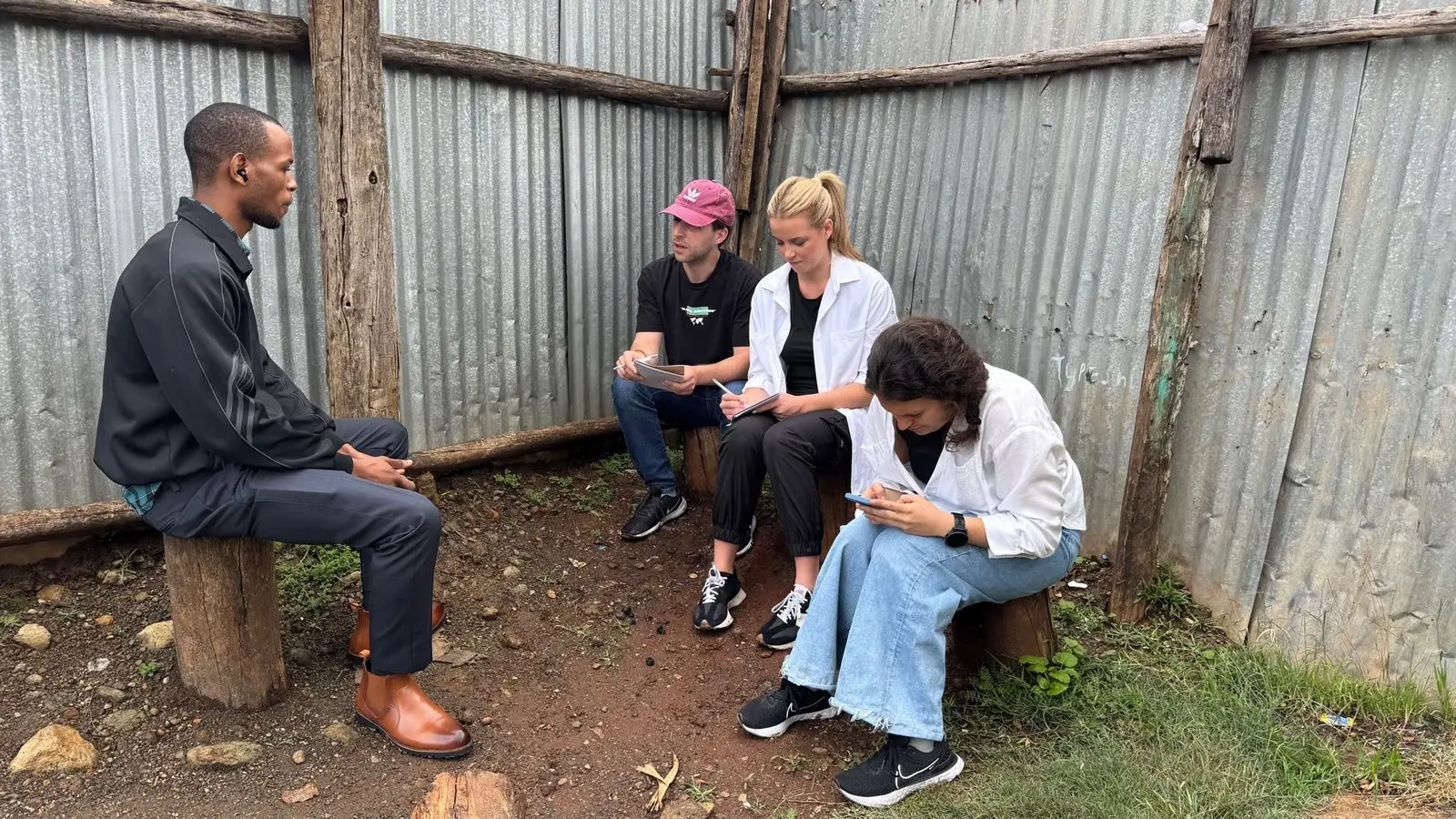
- Held more than 16 in-depth interviews over three days with Wi-Fi users and with shop owners who could host Wi-Fi
- Spent more than 20 hours with konnekt's leadership to understand the business and co-design ideas
- Benchmarked community connectivity models from around the world
- Tested their ideas with local market experts and with users
What they heard
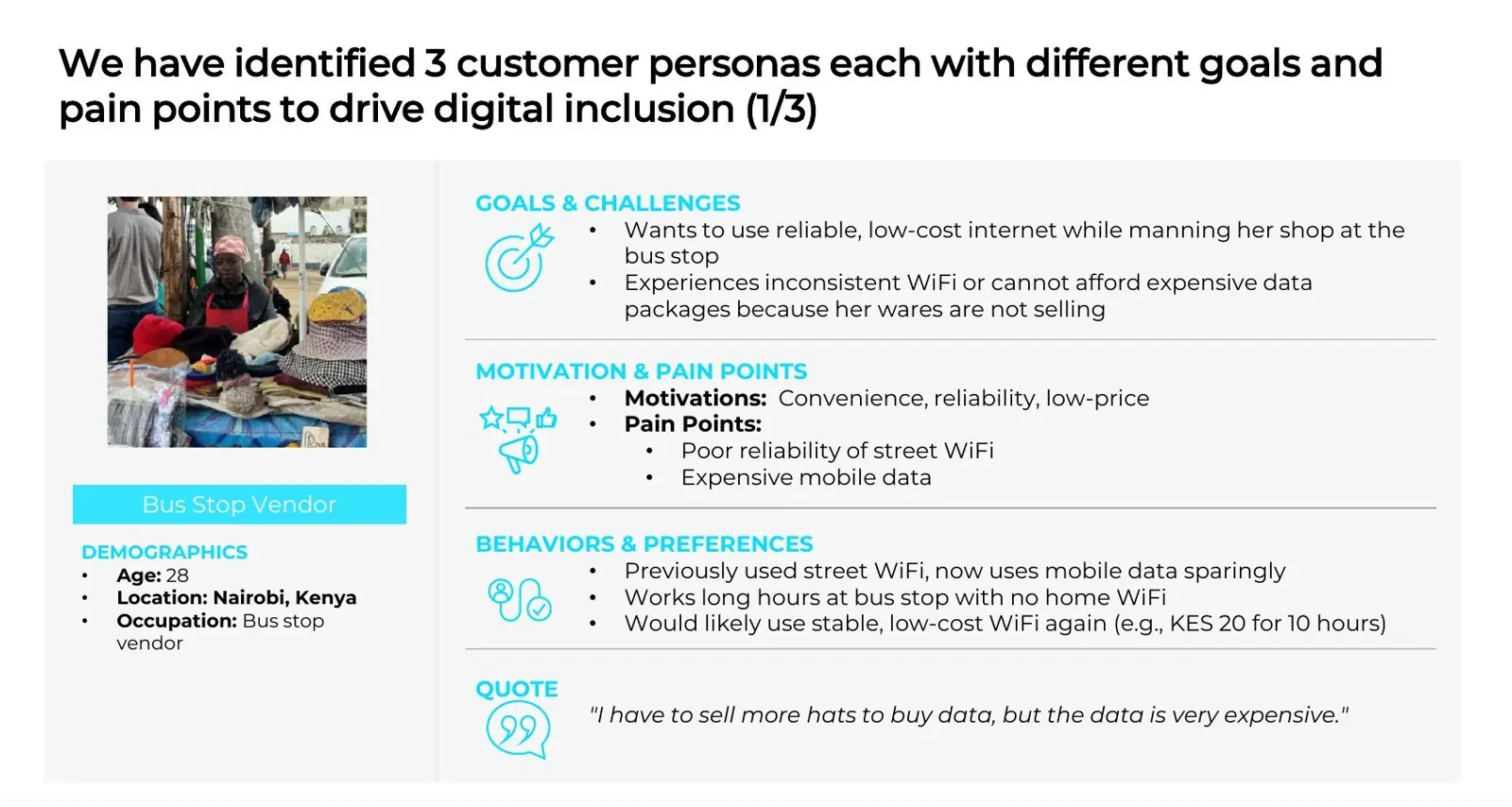
The interviews produced three new personas: a bus-stop vendor who works long hours with no home Wi-Fi, a value-seeking family man who wants to watch football while he waits for his matatu, and a young “multi-jobber” juggling babysitting and gig work who needs to be online wherever she is.
“I have to sell more hats to buy data, but the data is very expensive.” A bus-stop vendor in Kawangware
Five insights stood out:
- Reliability beats free. Bad experiences with street Wi-Fi had left deep scepticism. People valued a stable connection more than a free one, and a cheap but unreliable service would destroy trust.
- “Free” needs a clear exchange. Many people were happy to watch a short ad or answer a quick survey for access, as long as the deal was explained. The team suggested calling it “earned access”.
- Demand lives where people wait. Commuters and vendors spend hours at bus stages, salons and markets, falling back on expensive mobile data. Some people go to a bus stage just to use the Wi-Fi.
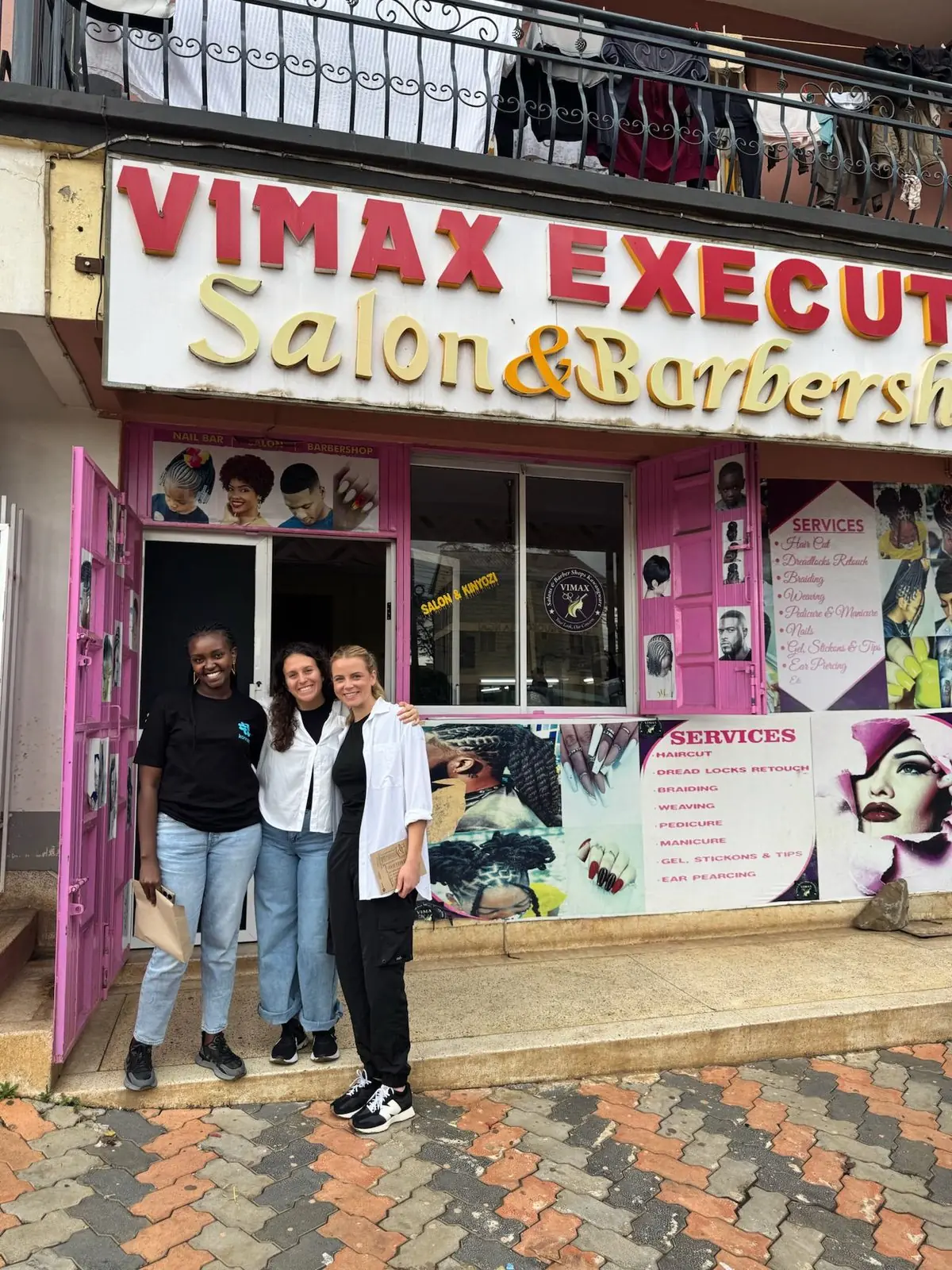
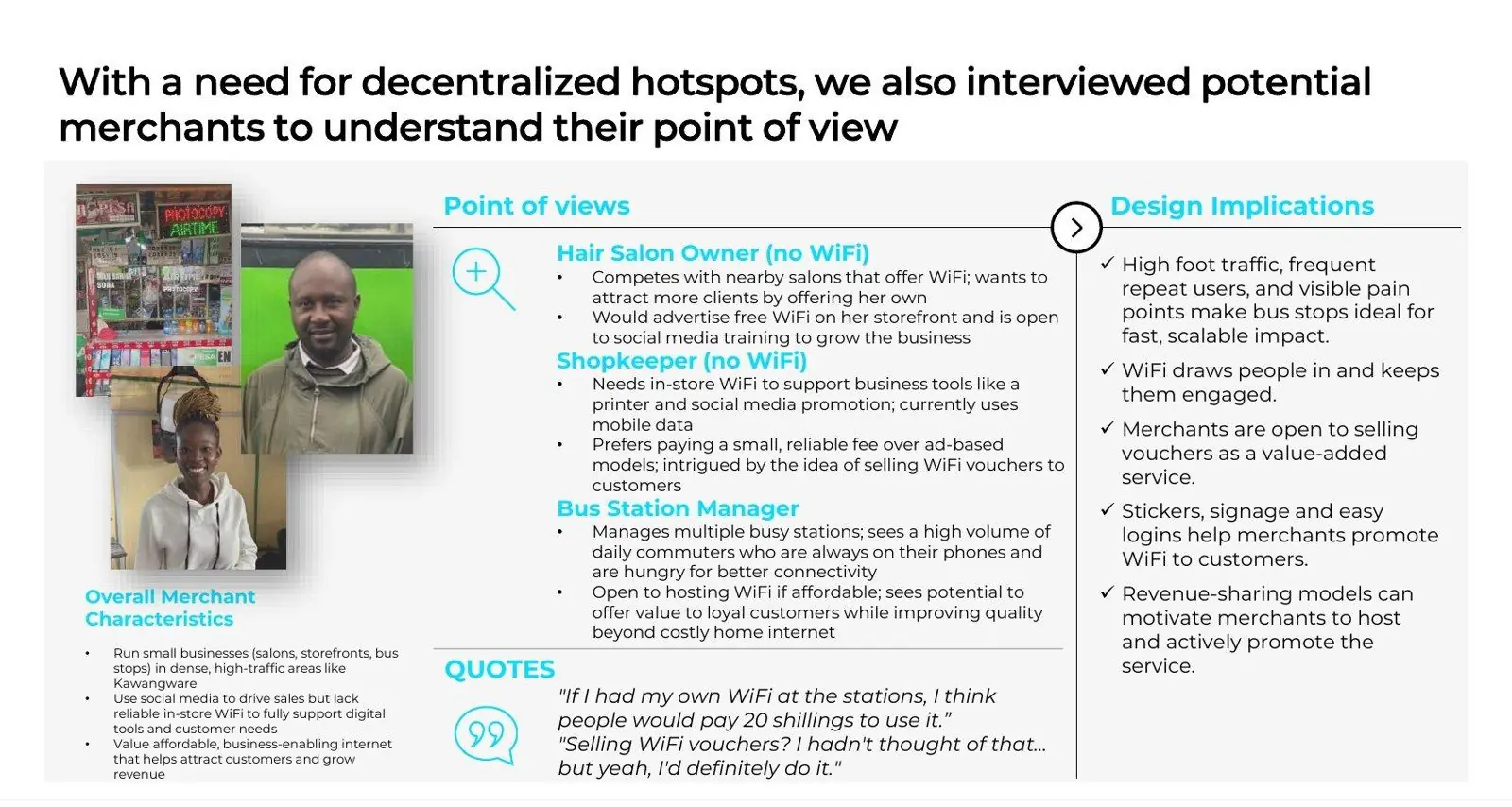
- Shopkeepers want to host. A salon owner wanted Wi-Fi to compete with the salon next door. A shopkeeper liked the idea of selling Wi-Fi vouchers. A bus-station manager saw a steady stream of commuters who were always on their phones.
- Digital confidence varies, but interest is high. Sign-up has to be visual, light on words and built for the phone, and people were open to quick digital skills tips.
“Selling Wi-Fi vouchers? I hadn't thought of that… but yeah, I'd definitely do it.” A shopkeeper in Kawangware
What they designed
From five concepts, the team chose and developed one: konnekt-in-a-Box, voucher-based community Wi-Fi hosted by local businesses close to busy spots like bus stages and markets.
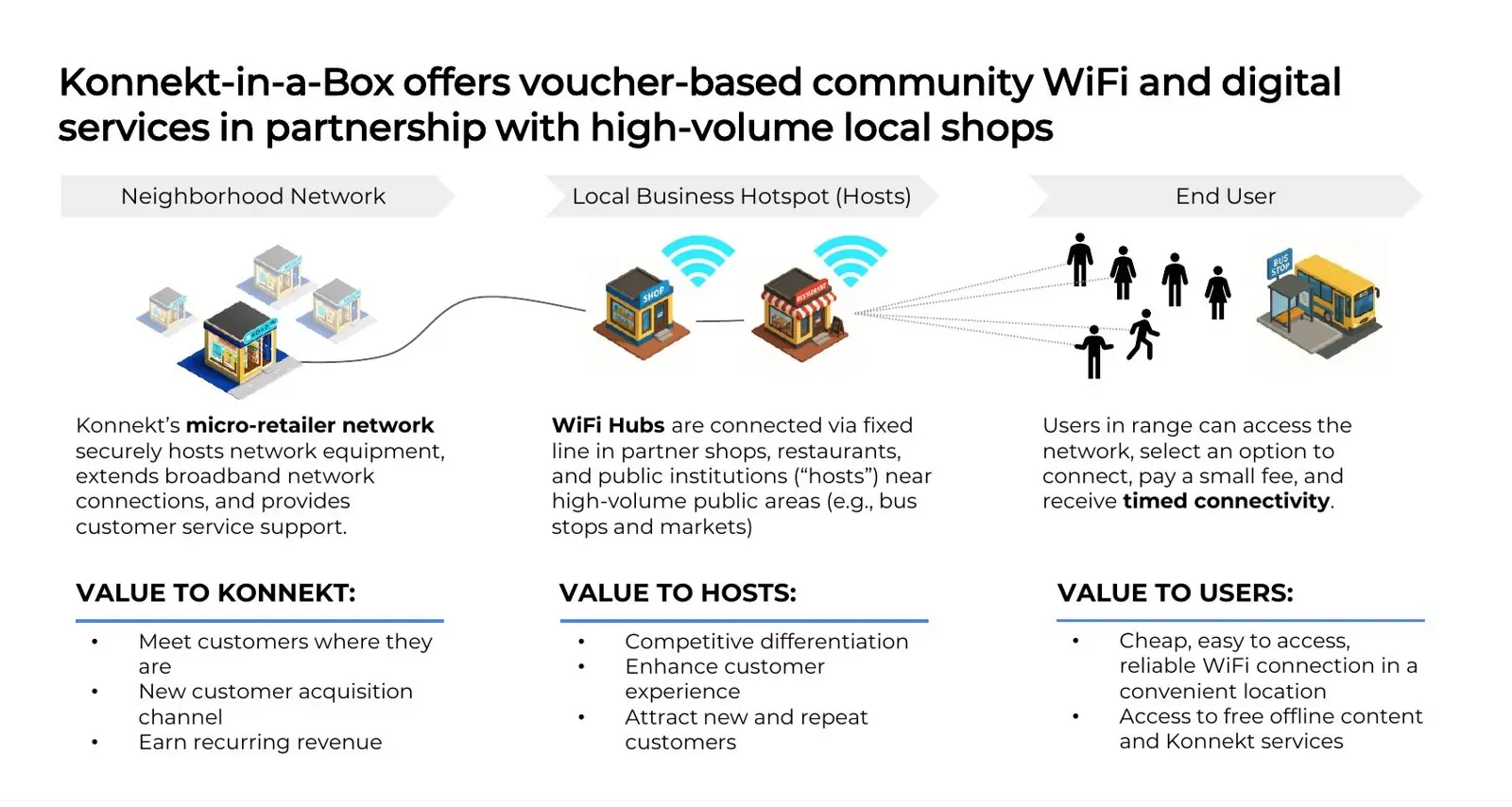
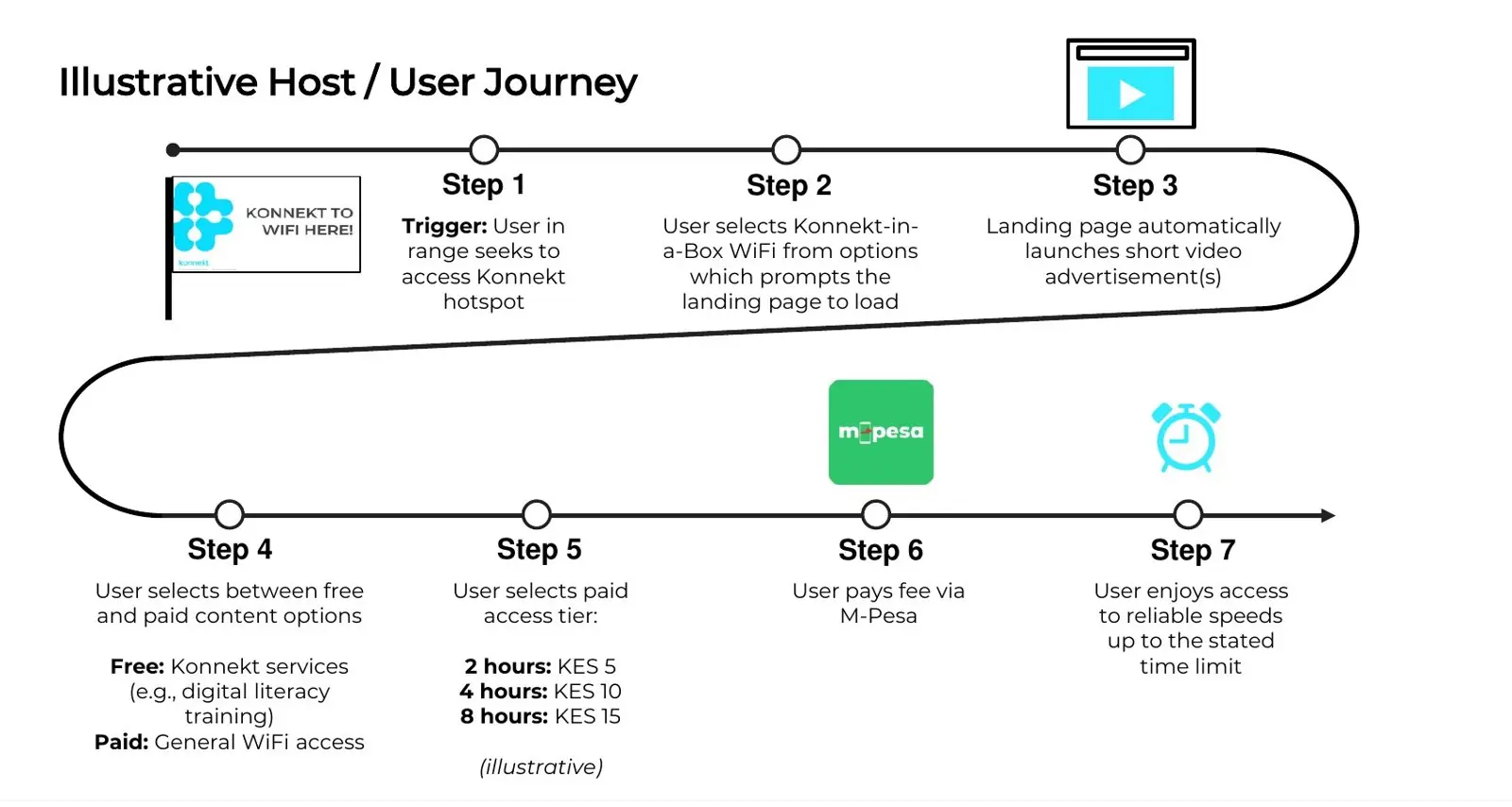
- For users: fast, reliable Wi-Fi in places they already visit several times a week, paid in small amounts by M-Pesa for a few hours at a time, with a free tier that unlocks konnekt services such as digital skills content.
- For hosts: more customers and more time in store, simple access with no passwords to share, and a share of the revenue.
- For konnekt: a low-cost way to reach new customers, a trial of our service that can lead to home fibre, and local businesses acting as trusted champions in the community.
The team also delivered a go-to-market plan, a three-stage roadmap from a small pilot to neighbourhood scale, and an “extra credit” idea: Wi-Fi hubs at churches and mosques, which are trusted, secure and busy for hours at a time.
What happened next
Since then we have launched BlueZones: fibre-backed, meshed Wi-Fi across markets, salons and bus stages, sold in small, affordable passes through neighbourhood agents and kept running through power cuts. Many of the team's insights about reliability, waiting zones and local hosts are at the heart of how they work.
Read the Fuzion case study on how BlueZones stay online →
Thank you
Our thanks to the HBS team and the FIELD Global Immersion faculty and staff, and above all to the residents and business owners of Kawangware who shared their time and their stories.